
 Facebook
 X
X
 Pinterest
 Copy Link
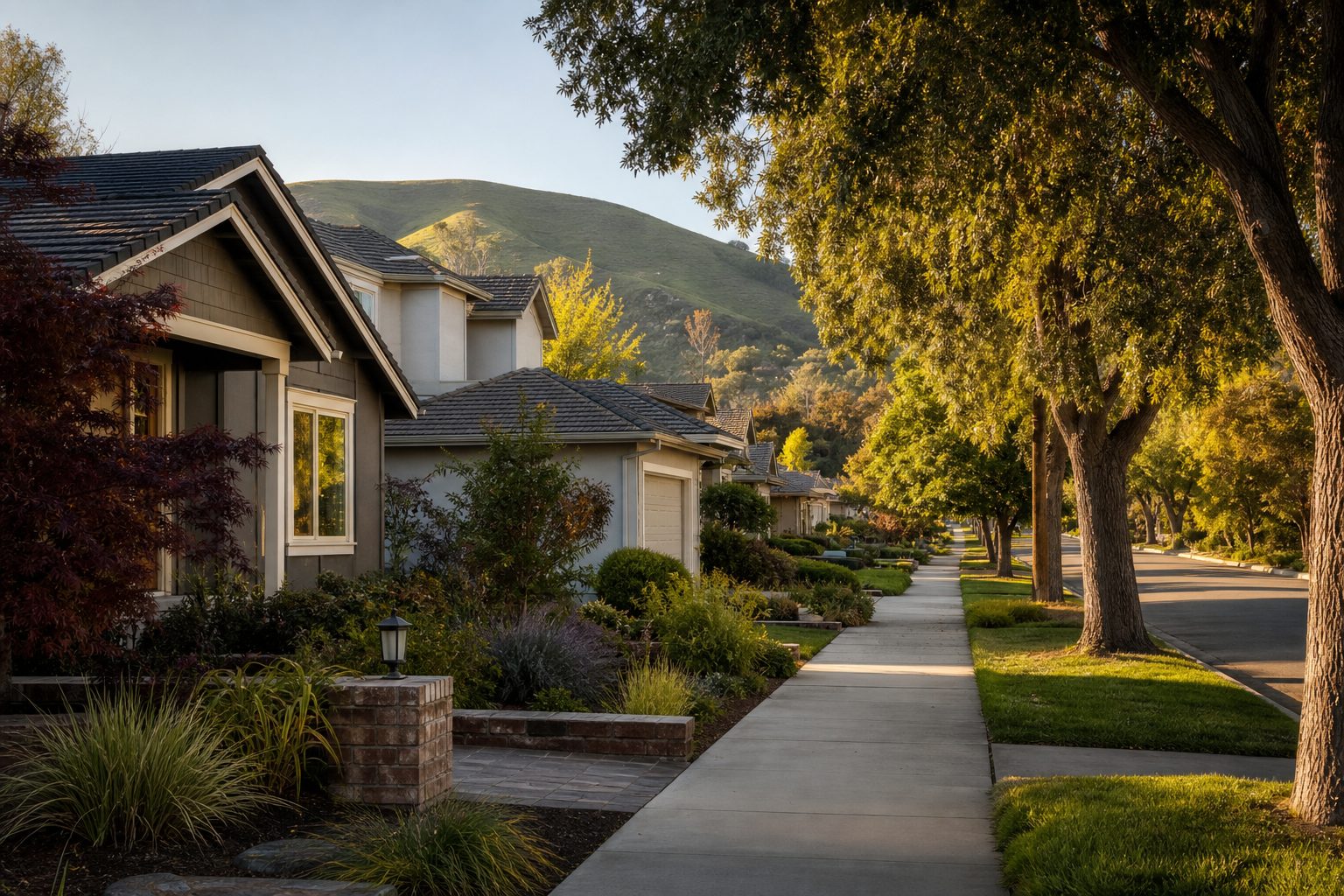
Bay Area single-family sellers in 2026 face modest 3–4% annual appreciation, a still-favorable seller’s market, and real tax complexity. Whether to sell now or hold 1–5 years depends on your equity position, how close you are to the Section 121 exclusion limit, your rate lock situation, and your personal timeline.
Should Bay Area homeowners sell their single-family home now or wait 1–5 years?
For most Bay Area single-family owners in 2026, selling now means stepping into a still-favorable seller’s market with modest but positive price growth, while waiting 1–5 years means betting on forecasts that range from flat real returns through 2028 to a meaningful recovery by 2030. The right answer depends on your equity size, your California tax exposure, whether you have a low-rate mortgage you’d be giving up, and what life is actually asking of you right now.
Key Takeaways
- The Bay Area single-family median reached $1,450,000 in May 2026, up 3.6% year-over-year, according to the California Association of REALTORS®, solid, but not the double-digit surge of 2021–2022.
- Recent local market data show Almaden Valley’s median sale price at $1,992,444 with homes selling in a median of 48 days, reflecting a seller-skewed but measured pace.
- Married couples can exclude up to $500,000 in capital gains on a principal residence sale under the federal Section 121 rule, but many Bay Area owners who bought in 2010–2013 have gains that exceed that threshold, making tax timing a central decision factor.
- Analysts are split on the 2028–2030 outlook: one view expects flat real price growth until roughly 2028, while another projects mid-single-digit annual appreciation that could bring prices near their 2024–2025 peaks by 2030.
- If you move out and rent your Bay Area home before selling, you retain the Section 121 exclusion only if you sell within the 5-year window from when you stopped using it as your primary residence, a critical deadline for long-term holders.
What does the 2026 Bay Area market actually look like for sellers?
The short answer: it’s a seller’s market, but a calm one. Q2 2026 Bay Area single-family data show a median sale price of $1.73M, a median sale-to-list ratio of 103.3%, and a median of just 12 days on market, meaning well-priced homes are still drawing competitive offers above list price. That’s a meaningful advantage for sellers who are ready to move.
At the regional level, the California Association of REALTORS® reported a Bay Area median of $1,450,000 for existing single-family homes in May 2026, up 3.6% year-over-year. That’s real appreciation, but it’s a far cry from the 15–20% annual surges of 2021–2022. A September 2026 analysis of Bay Area price history describes this period as a “market reset”, prices have stabilized and are inching upward, but the frenzy is gone.
At the neighborhood level, the picture varies. Here’s a snapshot of recent local market data across the areas I work most:
| Area | Median Sale Price | Median Days on Market |
|---|---|---|
| Almaden Valley | $1,992,444 | 48 |
| Blossom Valley | $1,320,000 | 51 |
| Santa Teresa | $1,250,000 | 46 |
| Willow Glen | $1,775,000 | 43 |
| Campbell | $1,965,000 | 49 |
| Aptos | $1,240,000 | 51 |
| Pacific Grove | $1,160,000 | 51 |
These are area-level medians from recent local market data, your specific home’s value depends on condition, street, build year, and how it shows. But the pattern is consistent: homes are selling, and they’re selling above list in most cases. The question isn’t whether the market is working. It’s whether now is the right moment for you.
What the forecasts say about waiting 1–5 years
This is where sellers get tripped up. It’s tempting to assume that waiting longer always means selling for more. In a market with modest appreciation, that’s not guaranteed.
On the cautious end, First Tuesday Journal’s San Francisco housing indicators project essentially flat real (inflation-adjusted) price performance until roughly 2028, with meaningful recovery arriving closer to 2030. If that view is right, a seller who waits two or three years may not net meaningfully more in real dollars, and will have carried the property, paid taxes and maintenance, and potentially missed a life transition in the meantime.
On the more optimistic end, a 2026 recovery scenario analysis argues that Bay Area prices could see mid-single-digit annual appreciation through the second half of the decade, potentially approaching 2024–2025 peak levels by 2030, especially in premium single-family neighborhoods. The CBRE San Francisco 2026 market outlook points to AI and innovation-sector investment as a genuine tailwind for regional housing demand, and their mid-year review confirms that momentum is building.
The honest framing: both views are plausible, and neither is certain. Whether “waiting for better prices” makes sense depends heavily on which scenario you believe, and on factors that have nothing to do with price forecasts at all.
How equity, taxes, and your mortgage rate change the math
The capital gains question every long-term Bay Area owner needs to answer
If you bought in Almaden Valley, Willow Glen, or Campbell in 2010–2013, there’s a good chance your unrealized gain is substantial, well into seven figures for many single-family homes at today’s prices. That changes the conversation entirely.
Under IRS Publication 523, the federal Section 121 exclusion lets you exclude up to $250,000 in capital gains ($500,000 for married couples filing jointly) from the sale of your principal residence, provided you’ve owned and lived in it as your main home for at least 2 of the last 5 years and haven’t used the exclusion in the prior 2 years. The California Franchise Tax Board follows this same federal exclusion, but any gain above the threshold is taxable as ordinary income in California, which has no preferential capital gains rate at the state level.
For a couple who bought a Santa Clara County home for $700,000 in 2012 and are now looking at a sale price near $2M, the gain after the $500,000 exclusion could still be substantial and fully taxable at both the federal and California level. That’s a number worth running with a CPA before you decide anything, and it’s a reason why selling while the home is still your primary residence often produces a better after-tax outcome than waiting until you’ve moved out and the clock starts ticking.
The rental conversion trap: a deadline most sellers don’t know about
A scenario I see come up often: a seller moves out of their Silicon Valley home, converts it to a rental for income, and plans to sell “in a few years.” That can work, but the 5-year window matters enormously.
Both the California FTB and IRS Publication 523 confirm that you can still qualify for the Section 121 exclusion after moving out, as long as you sell within 5 years of when you stopped using the home as your primary residence and you still meet the 2-of-5-year use test. Hold it as a rental beyond that window without re-occupying, and you may lose the exclusion entirely, turning a much larger portion of the gain into taxable income. On a high-appreciation Bay Area asset, that difference can run into hundreds of thousands of dollars. This is one of the most consequential timing factors in the sell-now-or-wait decision, and it’s one I always make sure my clients have reviewed with their tax advisor before we set a timeline.
The rate lock reality
Many Bay Area homeowners are sitting on 2.75–3.25% mortgages from 2020–2021. Selling means giving that up and financing the next purchase at rates that have been running in the 6–6.5% range. For a move-up buyer, that rate differential can translate into a significantly higher monthly payment on the next home, even if prices haven’t moved much. That’s a legitimate reason to stay put, especially if your current home still fits your life.
But it’s worth being honest about what “staying put” is actually costing you. If your home no longer fits, you need more space, less space, a different location, or a different chapter, the rate lock is a financial consideration, not a life plan. Every situation is different, and the only way to weigh it clearly is to run the full numbers with your lender and look at what the move actually costs you monthly, not just in rate terms.
Transfer taxes: real costs, but not a timing driver
Santa Clara County imposes a documentary transfer tax of $0.55 per $500 of property value, according to California Official Records for Santa Clara County. If you’re in San Jose, Palo Alto, or Mountain View, the city adds $1.65 per $500 on top of that, for a combined $2.20 per $500. These rates are set by local ordinance and don’t change based on market conditions, so they’re not a reason to sell now versus later. The absolute dollar amount will scale with your sale price over time, but the rate itself is fixed. Who pays, buyer or seller, is negotiable in the purchase contract, not set by statute.
Your specific net proceeds depend on your sale price, your mortgage payoff, these transfer taxes, and several other closing costs. That’s a personalized calculation, not something a blog post can answer accurately. I put together a detailed net sheet for every seller I work with before we ever talk about listing, it’s the only way to make a real decision.
If you want to see what selling your home would actually net you today, get a free home valuation with the CB Estimate® and we can build from there.
I’d also invite you to read what past clients have said about working through this exact kind of decision together, on Google and Zillow.
FAQ
If Bay Area prices are only rising 3–4% a year, does waiting 3–5 years actually make sense?
Probably not on price appreciation alone, especially when you account for inflation. First Tuesday Journal’s San Francisco housing indicators project essentially flat real price performance until around 2028, meaning a 3-year wait may not move your net proceeds meaningfully in inflation-adjusted terms. Waiting 5 years for the potential 2030 recovery scenario described by some analysts is a more defensible thesis, but it’s still a forecast, not a guarantee, and it has to be weighed against carrying costs, tax timing, and your own life timeline.
How do California and federal capital gains taxes affect the sell-now-versus-wait decision?
California taxes capital gains as ordinary income, there’s no preferential state rate, so gains above the federal Section 121 exclusion ($250,000 for single filers, $500,000 for married couples) are taxed at both the federal and California level, per the California FTB. For Bay Area owners with large unrealized gains, selling while the home is still your primary residence and your gain is still within or near the exclusion limit often produces a better after-tax outcome than waiting until the gain grows further or the exclusion eligibility lapses. Run the numbers with a CPA before you set a timeline.
If I move out and rent my Silicon Valley home before selling, do I lose the capital gains exclusion?
Not automatically, but a clock starts. Under IRS Publication 523 and California FTB rules, you can still qualify for the Section 121 exclusion after converting to a rental, as long as you sell within 5 years of when you stopped living there and still meet the 2-of-5-year use test. Hold it as a rental beyond that window without re-occupying, and you may lose the exclusion entirely, a potentially very large tax consequence on a high-value Bay Area property. This is a detail worth confirming with a tax advisor well before you commit to a hold strategy.
We have a 3% mortgage rate, how much does that change the trade-off if we sell now?
It’s a real financial consideration. Giving up a sub-3% rate to finance a replacement purchase at 6–6.5% means a meaningfully higher monthly payment on the next home, even if prices are similar. That rate differential is a legitimate reason to stay put if your current home still fits your needs. But if your life has outgrown the home, or the home no longer makes sense for your stage, the rate lock becomes a cost to weigh, not a reason to stay indefinitely. A conversation with your lender about what the move actually costs you monthly is the right starting point.
Are Bay Area home prices expected to be significantly higher by 2030?
Analysts disagree. One view, from First Tuesday Journal, expects flat real price growth until roughly 2028 with meaningful recovery closer to 2030. A contrasting view from PitchGrade’s 2030 recovery scenario projects mid-single-digit annual appreciation, with prices potentially near 2024–2025 peaks by 2030, supported in part by the AI and tech sector demand documented in the CBRE San Francisco 2026 outlook. The honest answer is that both are plausible, and a 5-year hold is a bet on the optimistic scenario, one that may or may not pay off in real terms.
The sell-now-or-wait question doesn’t have a universal answer, but it does have a right answer for your specific situation. Your equity, your tax position, your rate, and your life timeline all feed into it, and the only way to see the full picture is to work through the numbers with someone who knows this market. Start with a free home valuation and let’s figure out what the timing actually looks like for you.
Equal Housing Opportunity. Kelly Ray is a licensed real estate agent with Coldwell Banker Realty, regulated by the California Department of Real Estate. The Coldwell Banker® System is comprised of company owned offices which are owned by a subsidiary of Anywhere Advisors LLC and franchised offices which are independently owned and operated. This article is general information only and is not legal, tax, or financial advice. Confirm your own figures with your closing agent, tax advisor, or lender.
