
 Facebook
 X
 Pinterest
 Copy Link
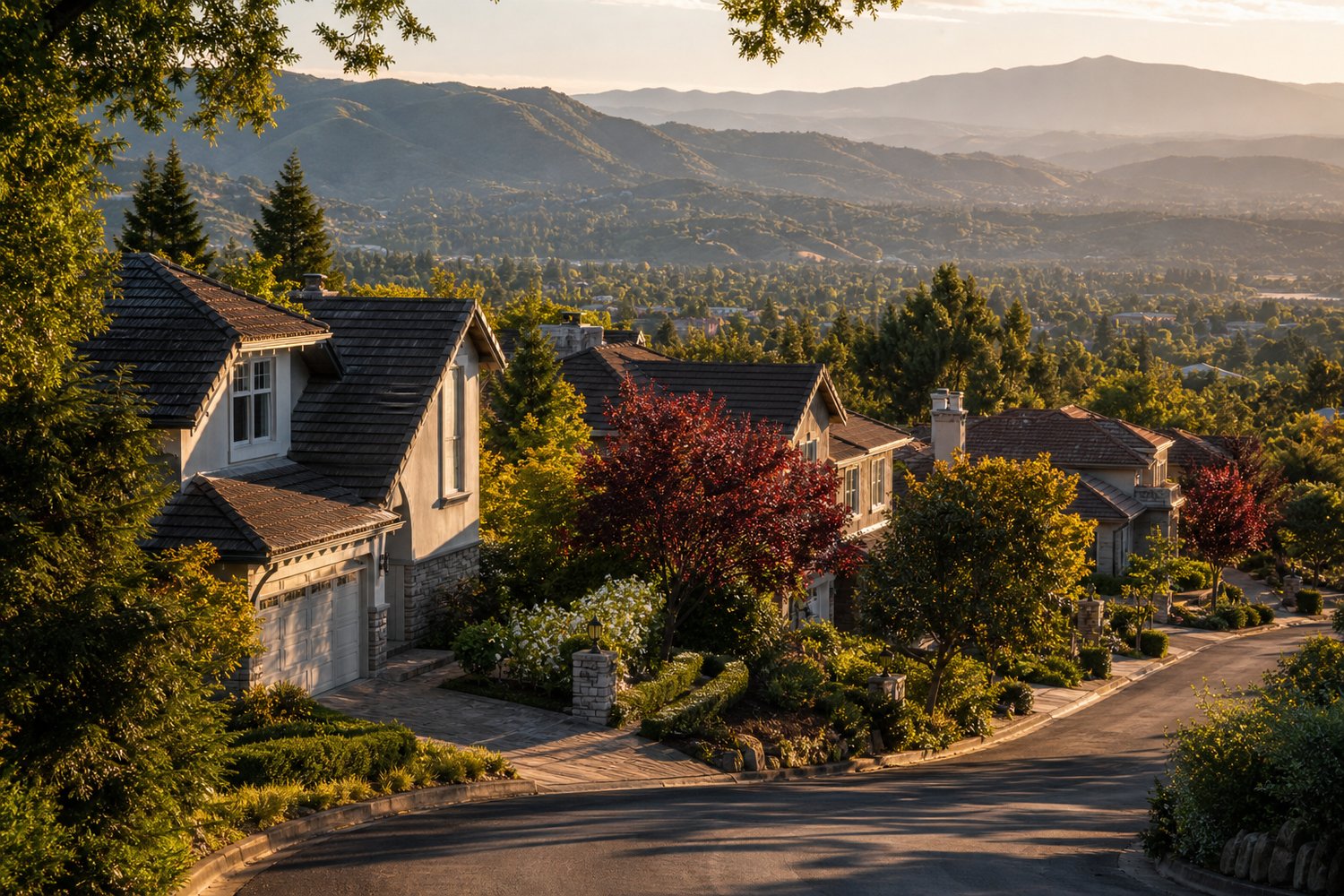
The Bay Area luxury estates market is strong in pockets and softer in others. San Francisco’s $5 million-plus sales rose 109% from January to September 2026, while San Jose-area luxury entry prices fell 10.8% year over year. Estates are priced on their own comparable sales, not on a regional headline.
Bay Area Luxury Estates Market Trends in 2026
How is the Bay Area luxury estates market performing in 2026?
The Bay Area luxury estates market is strong in pockets and softer in others, so no single headline number tells you what your estate is worth. In San Francisco, sales above $5 million rose 109% from January through September 2026 compared with the same months of 2025, according to Compass data reported by Yahoo Finance. Yet Realtor.com’s September 2026 luxury report showed the luxury entry point in the San Jose area down 10.8% year over year. Both are true, because the high end moves property by property.
Key Takeaways
- San Francisco sales above $5 million rose 109% in January through September 2026 versus the same period of 2025, per Compass data (a brokerage-defined segment).
- In September 2026, about 92% of San Francisco homes sold above asking, and the upper half of that market averaged 134% of asking price, per Compass analysis.
- Realtor.com’s September 2026 luxury entry point was $3,349,600 in San Jose-Sunnyvale-Santa Clara (down 10.8% year over year) and $2,499,232 in San Francisco-Oakland-Fremont (down 9.2%).
- Sources define “luxury” differently (top 5% of a metro, $5 million and up, or a local upper tier), so their numbers should never be stacked side by side.
- An estate’s price depends on its lot, privacy, condition, and true comparable sales, not on a neighborhood median.
What is driving the Bay Area Luxury Estates Market in 2026?
The strongest demand is concentrated in scarce, well-located, move-in-ready properties, and local reporting ties much of it to technology and AI-sector wealth. At the same time, some national luxury measures have eased. That’s why I tell sellers and buyers to read the segment, not the headline.
How hot is San Francisco’s high end?
Very hot in the most contested pockets. In September 2026, roughly 92% of San Francisco homes sold above asking price, and the upper half of the market averaged 134% of asking, according to Compass analysis reported by Yahoo Finance. Be careful with that second number. “Upper half” is not a fixed luxury threshold like $5 million, so it can’t be read as what an estate will fetch.
What about the Peninsula and Silicon Valley?
Coverage from The Almanac in September 2026 described rising demand for high-end homes on the Peninsula, with the region’s technology and AI sectors cited as a factor. That’s a market explanation from local reporting, not a count of AI-related purchases.
The South Bay and Peninsula are also different from San Francisco. In places like Los Altos Hills, Saratoga, Atherton, and Woodside, acreage, privacy, and redevelopment potential can move a price as much as the house itself. One regional median can’t capture that.
Is luxury really outperforming?
It depends on the measure and the window. A Redfin analysis reported by Yahoo Finance found Bay Area luxury ZIP codes rose 13.4% in the two years after ChatGPT’s launch, more than twice the gain in the next-priciest tier. That’s a historical comparison ending in 2025, not a 2026 appreciation rate.
Realtor.com’s September 2026 report puts the luxury entry point at $3,349,600 in San Jose-Sunnyvale-Santa Clara and $2,499,232 in San Francisco-Oakland-Fremont, down 10.8% and 9.2% year over year. Realtor.com uses its own national luxury methodology, so treat those as a separate yardstick from the Compass figures. The honest read is segmentation, not uniform outperformance.
How should you price a luxury estate in Silicon Valley?
Price it off comparable sales matched on lot, condition, views, privacy, and price tier, not off a neighborhood median or a regional headline. Two estates a few blocks apart can sit hundreds of thousands of dollars (or more) apart for good reasons.
When I run a luxury valuation, these are the features that separate one estate from the next:
- Lot size and usable acreage: flat, buildable land is different from steep or constrained land.
- Privacy, views, and security: hard to replicate, and buyers notice quickly.
- Architectural quality and renovation status: turnkey, dated, or teardown candidate.
- Accessory structures: guest houses, pools, and studios that add real function.
- Development potential: what the parcel could become matters in the right locations.
In the Bay Area luxury estates market, my view is that pricing right in the first week beats chasing the market down later. The listings that draw strong early attention are the ones priced to the comps. They don’t carry an optimistic stretch. If you’re weighing a fall listing, this overview of the fall selling season is a useful companion read, and these home-selling tips cover the prep side.
What does the South Bay look like at a glance?
Here’s a reference point from four of my areas. These are medians for all home sales, not luxury-only figures, and the days-on-market column counts homes that sold. Your estate’s value comes from its own comps, not from these.
| Area | Median Sale Price | Median Days on Market |
|---|---|---|
| Almaden Valley | $1,940,000 | 52 |
| Blossom Valley | $1,290,000 | 43 |
| Santa Teresa | $1,300,000 | 47 |
| Aptos | $1,250,000 | 38 |
Almaden Valley’s median is well above the others, and homes there took a median of 52 days to sell. That’s a reminder that even inside the South Bay, price and pace vary a lot by location.
Do turnkey estates sell differently from homes that need work?
In my experience, yes. The sharpest competition goes to exceptional, move-in-ready properties in strong locations. High-priced homes with functional, condition, or location drawbacks tend to get more scrutiny and more negotiation. If your estate has a drawback, we should talk about it before we set a price, not after the first showings.
What should luxury buyers know about negotiating right now?
Outside the most contested properties, luxury buyers generally face less competition and have more negotiating room than buyers at lower price points. The exceptions are scarce, turnkey estates, where overbidding has been reported in parts of San Francisco in September 2026.
- Know which kind of property you’re bidding on. A rare, polished estate calls for a different strategy than a home that’s been sitting.
- Compare like with like. Use sales of similar lots and condition, not the average of an entire city.
- Confirm your financing with your lender. Large loan amounts have their own requirements, and you want certainty before you write an offer.
- Coordinate the sale of your current home. If you’re selling one home to buy another, this guide to buying and selling at the same time is a good starting point, and I’ll map out the timing with you.
My background in negotiation shapes how I approach these deals. At this price level, the terms, timeline, and contingencies often matter as much as the number.
The Bay Area luxury estates market rewards sellers and buyers who treat each property as its own market. If you’d like a read on your own home or one you’re eyeing, I’ll walk you through the comps in a personal consultation. You can also get a free home valuation with the CB Estimate® as a starting point.
If you’d like to hear from past clients, you can read my reviews on Google and Zillow.
FAQ
Are Bay Area luxury homes still selling above asking price in 2026?
In parts of San Francisco, yes. Compass analysis showed about 92% of San Francisco homes sold above asking in September 2026, with the upper half of the market averaging 134% of asking. That doesn’t apply to every estate or every county, and Silicon Valley estates need to be judged on their own comps.
What price range counts as a luxury home in San Francisco or Silicon Valley?
There isn’t one agreed line. Sources use the top 5% of a metro, sales above $5 million, or a local upper tier. Realtor.com’s September 2026 entry points were $3,349,600 for San Jose-Sunnyvale-Santa Clara and $2,499,232 for San Francisco-Oakland-Fremont, and those reflect its own methodology.
Is the AI and technology sector increasing demand for Bay Area estates?
Local coverage says so. The Almanac’s September 2026 reporting linked stronger high-end demand in San Francisco and on the Peninsula to the region’s technology and AI sectors. That’s a reported explanation, not a verified tally of purchases, so I’d treat it as one factor among several.
Should a luxury home seller price below market value to attract multiple offers?
Price to the comparable sales, not below them. Competition comes from a well-supported price, strong presentation, and a property that stands out. Underpricing an estate can leave real money behind, so we’d set the number together after reviewing the comps.
Are Peninsula and Silicon Valley luxury estates outperforming San Francisco homes?
The available figures don’t support one clean answer. San Francisco’s $5 million-plus sales and bidding indicators were strong in 2026, but the sources use different definitions, geographies, and time windows. Peninsula and South Bay estates should be compared against their own recent sales, which is what I do in a consultation.
Equal Housing Opportunity. Regulated by the California Department of Real Estate. This article is general information, not legal, tax, or financial advice; confirm your own numbers with your closing agent, tax advisor, or lender. The Coldwell Banker® System is comprised of company owned offices which are owned by a subsidiary of Anywhere Advisors LLC and franchised offices which are independently owned and operated.
