
 Facebook
 X
 Pinterest
 Copy Link
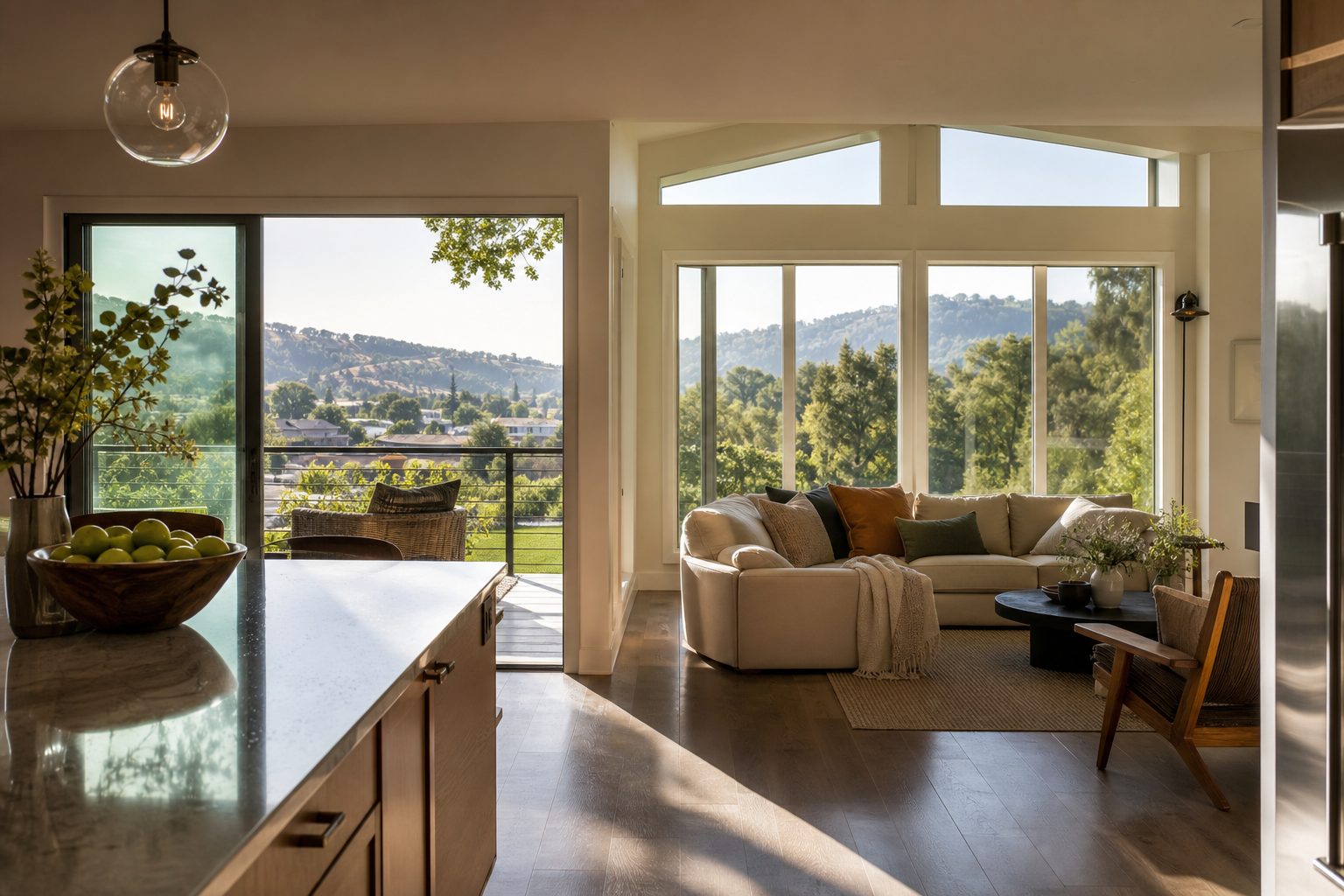
In Silicon Valley’s mid-2026 market, homes priced accurately against the most recent comparable sales, within a tight geographic radius and 60–120 day window, attract stronger offers faster. Overpricing by even a small margin can stall a listing past the critical two-week window, often forcing a price cut that signals weakness to buyers.
What is the best pricing strategy for selling a home in Silicon Valley?
The best pricing strategy in Silicon Valley is to anchor your list price to the most recent comparable sales, ideally within 60–120 days and a tight geographic radius, rather than to county-wide medians or what a neighbor got in the spring. Homes priced accurately for their specific micro-market in 2026 are still attracting competitive offers, while overpriced listings are sitting and requiring cuts that ultimately cost sellers more than a well-calibrated price would have.
Key Takeaways
-
Recent local market data shows Almaden Valley’s median sale price at $1,973,500, with homes spending a median of 51 days on market, pricing even slightly above where buyers are transacting can push a listing well past that window.
-
Santa Clara County’s median sales price for single-family resale homes is up about 2.6% year-over-year as of mid-2026, according to the Santa Clara County Real Estate Market Trends Report, meaning comps from 12 months ago can already be stale.
-
A national portal’s Santa Clara County dashboard (data through July 31, 2026) shows homes going pending in roughly 18 days on average, well-priced homes move; overpriced ones don’t.
-
Median sale prices across South Bay neighborhoods range from $1,160,000 in Pacific Grove to $1,973,500 in Almaden Valley, so pricing must be hyper-local, not county-wide.
-
The first 10–14 days on market are the highest-leverage window, a listing that hasn’t attracted strong interest in that period is almost always a pricing problem, not a marketing problem.
Why does the first two weeks on market matter so much in Silicon Valley?
The first 10–14 days are when a new listing gets its maximum organic attention, buyers on alert, agents previewing, open house traffic peaking. If you haven’t attracted serious offers in that window, the market is telling you something.
In my experience working with sellers across Almaden Valley, Willow Glen, and Campbell, a listing that sits past the two-week mark almost always comes down to one thing: the price wasn’t calibrated to where buyers were actually willing to transact in that specific micro-market, at that specific moment. It’s rarely the photography, the staging, or the marketing.
And here’s the real cost of that misstep. Once you reduce the price, buyers who already passed on the listing don’t always come back. They wonder what’s wrong with it. The home that could have generated multiple offers in week one is now competing against newer listings with fresh momentum.
According to a Zillow market dashboard for Santa Clara County (data through July 31, 2026), the average home in the county goes pending in roughly 18 days. That’s the competitive baseline. Pricing right from day one is what keeps you inside that window.
How the Silicon Valley market is behaving in late summer 2026
The market heading into fall 2026 is nuanced. It’s not the frenzy of 2021, but it’s also not a buyer’s market. The Santa Clara County Real Estate Market Trends Report shows the median sales price for single-family resale homes up about 2.6% year-over-year, with the average sales price up around 7.3%, a gap that tells you higher-end, move-in-ready homes are doing the heavy lifting.
The same Zillow county data puts the average home value around $1.60M, essentially flat on the year, with the median sale price still modestly above the median list price. Translation: well-positioned listings are still getting bid up. Poorly positioned ones are sitting.
Sellers pricing in August and September 2026 need to be honest about one thing: spring comps may not hold. If your neighbor sold in April at a strong number, that was peak-season demand. The most relevant data right now is July 2026 and later, and I always pull the freshest available comps before we set a number.
How should you actually build a pricing strategy for your Silicon Valley home?
Strategic pricing in this market is part data, part judgment. Here’s how I approach it with every seller.
Start with hyper-local comps, not county averages
Silicon Valley is not one market. It’s dozens of micro-markets layered on top of each other. Recent local market data shows a median sale price of $1,973,500 in Almaden Valley and $1,335,575 in Blossom Valley, two neighborhoods that are geographically close but price at very different levels. A county-wide average tells you almost nothing useful about what your specific home should list for.
The table below shows how dramatically medians vary across the areas I serve:
AreaMedian Sale PriceMedian Days on MarketAlmaden Valley$1,973,50051Blossom Valley$1,335,57554Santa Teresa$1,250,00049Willow Glen$1,775,00047Campbell$1,971,00042Aptos$1,238,50053Pacific Grove$1,160,00044
These are area-level medians from recent local market data (trailing roughly 90 days, as of September 2026). Your home’s value depends on its condition, street, build year, lot, and the specific comps within your immediate neighborhood, not just the area median. But this table illustrates why pricing a Santa Teresa home against Almaden Valley sales, or vice versa, will get you into trouble fast.
Use a 60–120 day comp window, not 12 months
In a market where prices have moved even modestly over the past year, a sale from 10 months ago can be meaningfully stale. I prioritize sales within the last 60–120 days when building a pricing recommendation, and I weight the most recent sales most heavily. If comparable homes sold in June and July, those are my anchors, not what happened last October.
Price per square foot is a useful sanity check, but it’s not a formula. I adjust for lot size, remodel quality, layout, and any lifestyle features that matter to buyers in that specific neighborhood. Two homes on the same street with the same square footage can legitimately price differently if one is fully updated and one is original condition.
Understand how condition affects your achievable price
Silicon Valley buyers, particularly in the tech sector, have high expectations for turn-key condition. Modern systems, updated kitchens and baths, home office space, and outdoor living areas can all move your home’s achievable price meaningfully above the neighborhood median. Original-condition homes aren’t unsellable, but they compete in a different comp set and need to be priced accordingly.
I segment pricing by renovation level when I build a comparable sales analysis: fully remodeled, partially updated, and original. Mixing those categories gives you a muddled number. Keeping them separate gives you a defensible price.
Know when “strategic underpricing” makes sense, and when it doesn’t
In some Silicon Valley micro-markets, listing slightly below the most recent comparable sales is a deliberate tactic to generate broad interest and drive a competitive offer situation. It works when inventory is tight, buyer demand is strong, and the home is in excellent condition. It does not work in every situation, and it requires careful judgment about the current absorption rate in your specific neighborhood.
Recent local market data shows 46 active listings in Almaden Valley and 96 homes sold in the trailing 90 days, that’s a pace that still favors sellers who price accurately. But “strategic underpricing” in a slower segment can simply mean you accept a lower price without generating the competition you were counting on. Your specific number depends on your home’s condition, location, and the current inventory picture, that’s exactly what a local market analysis is designed to answer.
Watch the appraisal gap
One thing that doesn’t get discussed enough: even in a competitive market, appraisal and loan limits can constrain how high buyers can bid relative to list price. If your home is priced well above recent comps, a buyer using financing may not be able to close the gap between their offer and what the appraisal supports, which means deals fall apart, or you end up renegotiating anyway. Accurate initial pricing reduces that risk for everyone.
According to Redfin’s San Francisco housing market data, San Francisco home prices were up 14.2% year-over-year over the three months ending July 2026, with a median sale price around $1.7M. Meanwhile, Realtor.com’s July 2026 local report notes San Francisco’s median list price fell 4.2% year-over-year to roughly $948,500, still more than double the U.S. national median list price of about $428,950. The divergence between list and sale prices in the Bay Area reinforces why pricing strategy here isn’t a simple formula.
Every situation is different, and the only way to know what your home should list for is to run the numbers with someone who knows this market at the street level. That’s the conversation I have with every seller before we ever talk about a list date.
If you want to see what your home is worth based on the most current data, you can get a starting point with the CB Estimate® on my website, and then let’s talk through the local nuances that no automated tool can account for.
I’d also invite you to read what past clients have said about working with me on Google and Zillow.
Frequently Asked Questions
Are homes in Silicon Valley still selling over asking in 2026?
Yes, in many micro-markets, but selectively. The Zillow Santa Clara County dashboard (data through July 2026) shows the median sale price still modestly above the median list price, meaning well-positioned listings continue to attract competitive bids. Homes that are priced accurately, in good condition, and in high-demand neighborhoods are still generating multiple offers; homes priced above where buyers are transacting are not.
Why do some Silicon Valley listings sit for weeks while others sell in a weekend?
Almost always, it comes down to pricing relative to the most recent comparable sales in that specific micro-market. A home that sells in a weekend is priced where buyers are actively transacting right now. A home that sits has usually been priced against older comps, a stronger season, or a neighboring area with different demand. After the first two weeks, buyer attention drops sharply and the listing starts to carry a stigma that makes recovery harder.
Does pricing higher give me room to negotiate in the Bay Area?
In most Silicon Valley segments, no, it tends to hurt more than it helps. Buyers and their agents are well-informed and will simply skip a listing that appears overpriced relative to recent sales. The homes that generate the strongest final prices are typically the ones that attracted multiple offers from a well-calibrated list price, not the ones that started high and negotiated down. Pricing high to “leave room” is a strategy that made more sense in markets with fewer data-savvy buyers.
How far back should I look at comparable sales when pricing in San Jose or surrounding areas?
In the current market, I prioritize sales within the last 60–120 days and weight the most recent ones most heavily. The Santa Clara County Real Estate Market Trends Report shows year-over-year price movement in mid-2026, which means comps from 10–12 months ago can be meaningfully stale. In a fast-moving micro-market, even a 90-day-old sale may need a modest adjustment for current conditions.
How has the 2026 market changed the way I should price my Bay Area home?
The 2026 market rewards precision more than optimism. Higher mortgage rates have made some buyers more cautious about stretching above appraisal, so a list price that’s too far above recent comps creates appraisal-gap risk even when a buyer wants the home. At the same time, well-priced, turn-key homes in supply-constrained neighborhoods are still seeing strong demand. The strategy is accurate pricing anchored to the most recent data, not aggressive pricing based on what the market looked like six months ago.
Pricing right from the start is the single highest-leverage decision you’ll make as a seller in Silicon Valley. Get a free starting-point valuation with the CB Estimate® tool on my website, then let’s sit down and layer in the local knowledge that turns a number into a strategy.
About Kelly Ray
Kelly Ray is a top-producing REALTOR® with Coldwell Banker Realty serving Almaden Valley, Silicon Valley, and the greater Bay Area. She draws on a background in psychology, social work, and negotiation to guide clients from first homes to luxury estates. A Certified Negotiation Expert and Seniors Real Estate Specialist (SRES®), Kelly has earned Coldwell Banker’s Diamond Society and International President’s Awards.
Coldwell Banker Realty · 408.857.1638
Equal Housing Opportunity. Kelly Ray is a licensed real estate agent with Coldwell Banker Realty, regulated by the California Department of Real Estate. The Coldwell Banker® System is comprised of company owned offices which are owned by a subsidiary of Anywhere Advisors LLC and franchised offices which are independently owned and operated. This article is general information only and is not legal, tax, or financial advice. Confirm your specific numbers with your closing agent, tax advisor, or lender.
